
Community
North Texas man dead following auto-bicyclist accident, police say
By Lila Moreno
Advertisement · Why this ad?
Carmen, a Texas State University alumna, has over eight years of experience in health journalism. She has reported on public health issues for NPR affiliates and provides insight into the health landscape in Dallas, focusing on systemic challenges and community initiatives.
More from Carmen →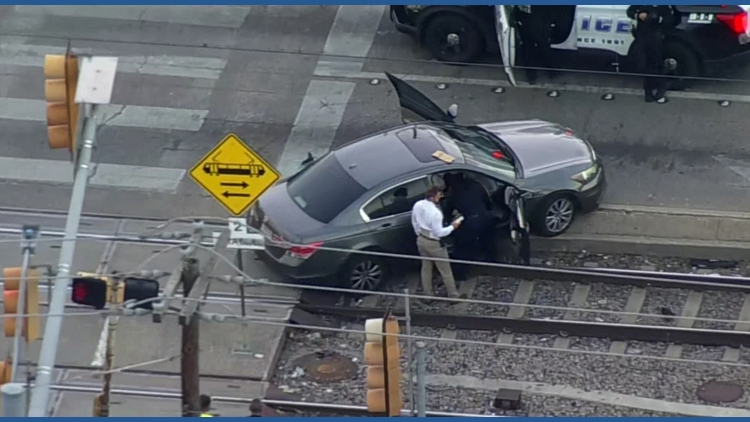
On a quiet morning near the bustling DART station in Dallas, the community was shaken by a harrowing incident that could have claimed multiple lives. Witnesses recall seeing a car suddenly swerve uncontrollably, crashing into another vehicle before plummeting onto the nearby train tracks. The driver, who was critically injured in the incident, is now at the center of a police investigation that highlights the dangers lurking on our streets and the importance of community vigilance.
Dallas police responded swiftly to the scene after reports of a serious car crash just outside the DART station on the morning of March 15. According to authorities, the driver suffered a fatal gunshot wound prior to losing control of the vehicle. The incident caused the driver to collide with another car, then veer off the roadway, ending up on the DART tracks. This chain of events disrupted train service and prompted an emergency response that lasted several hours.
Investigators are working to piece together the sequence of events leading up to the crash. Preliminary evidence suggests that the gunshot injury was the catalyst for the driver losing control, raising questions about safety and violence in the area. The injured driver was rushed to a nearby hospital, where they remain in critical condition. Fortunately, no passengers or bystanders were reported injured during the chaos.
The incident has sent shockwaves through the local community, which values safety and strong family bonds. Many residents expressed concern over the increasing frequency of violence and accidents near public transit hubs. Community leaders are calling for increased patrols and improved lighting in the area to prevent future tragedies. Local residents also shared stories of how incidents like these threaten the sense of security that families rely on to feel safe in their neighborhoods.
Maria Lopez, a mother of three who lives nearby, said, “It’s heartbreaking to see our community affected by violence. We need more police presence and community programs to keep our children safe.” Her family has been part of the Oak Cliff neighborhood for over two decades, witnessing both its growth and the challenges it faces. Like many in her community, she’s actively involved in neighborhood watch groups and local church initiatives aimed at fostering safety and unity. Her concern is shared by many residents who feel that the community’s resilience is being tested by these incidents.
This incident underscores broader issues affecting Dallas—particularly the rising concerns over gun violence and community safety. Oak Cliff, the neighborhood where the incident occurred, has historically been a vibrant and diverse area, home to a mix of long-time residents, new immigrants, small business owners, and young families. However, like many parts of Dallas, it has faced challenges related to crime, economic disparities, and social tensions.
Local leaders and community advocates emphasize that such tragedies have ripple effects beyond the immediate incident. They impact community morale, local businesses, and the sense of security that residents need to thrive. The incident also highlights the importance of targeted violence prevention programs, mental health support, and community-policing efforts tailored to the neighborhood's unique needs.
For many residents, especially those with children, the safety of local transit hubs is a top concern. DART stations serve as vital arteries connecting neighborhoods to jobs, schools, and healthcare facilities. When safety is compromised, it affects daily routines and long-term community development plans. The Dallas City Council and DART officials are now under pressure to address these concerns proactively.
In response to the incident, community organizations have stepped up efforts to foster dialogue and implement safety measures. The Oak Cliff Neighborhood Association, along with local churches and civic groups, are organizing safety forums to discuss concerns and brainstorm solutions. These forums aim to bring together residents, law enforcement, and city officials to develop actionable plans.
One such initiative is the 'Safe Streets' campaign, launched by local nonprofits, which includes increased patrols, street lighting improvements, and community patrol programs. Volunteers are also being trained to serve as neighborhood ambassadors, fostering trust between residents and police officers. These efforts are part of a broader strategy to rebuild community resilience and reduce violence.
As authorities continue their investigation, the focus remains on uncovering all factors involved, including the circumstances surrounding the gunshot wound. The Dallas Police Department has pledged transparency and community engagement throughout the process. They are also collaborating with federal agencies to trace the source of the firearm involved, which could lead to broader efforts to curb illegal gun possession in the area.
City officials are reviewing safety protocols at DART stations and surrounding streets. This includes considering additional surveillance cameras, improved street lighting, and increased police presence during peak hours. The Dallas City Council has scheduled a public safety hearing next month, where community members can voice their concerns and suggest measures.
In addition, mental health and violence prevention programs are being prioritized. Dallas’s Office of Community Safety is working with local clinics and mental health providers to expand access to counseling and crisis intervention services. These programs aim to address underlying issues that contribute to gun violence and community instability.
Moreover, local schools and faith-based organizations are planning educational events focused on conflict resolution, gun safety, and community cohesion. These initiatives seek to empower residents, especially youth, to become active participants in building a safer neighborhood.
This incident is a stark reminder of the ongoing challenges Dallas faces with regard to urban safety and social equity. As the city experiences rapid growth, disparities in economic opportunities and access to services persist, fueling tensions that sometimes erupt in violence. Community leaders are calling for more comprehensive strategies that include economic development, affordable housing, and youth engagement programs.
Dallas’s Mayor, Eric Johnson, has expressed concern over the incident, emphasizing the city’s commitment to safety and community well-being. “We must work together to ensure that our neighborhoods are safe places to live, work, and raise families,” Johnson said in a statement. “This tragic event underscores the need for continued investment in community policing, mental health resources, and neighborhood revitalization.”
Local residents hope that this incident will serve as a catalyst for meaningful change. They believe that through collective action, Dallas can reduce violence and foster an environment where everyone feels secure. The community’s resilience, they say, is rooted in shared faith, family, and a steadfast commitment to each other’s safety and prosperity.
As Dallas continues to grow and evolve, so too does its resolve to protect its most vulnerable residents. Community organizations, law enforcement, and city officials are now working hand-in-hand to turn this tragedy into an opportunity for renewal. The hope is that future incidents will be prevented, and that residents can once again feel confident in the safety of their neighborhoods and transit systems.
By Lila Moreno

By Lila Moreno
By Lila Moreno
By Lila Moreno